Sultans of Chapan Inch
In 1327 a Delhi sultan moved his capital overnight and broke his own city. A satirical walk through Muhammad bin Tughluq’s decisions, and why they feel familiar.

Somewhere around the 1325 AD, the son of Ghiyasuddin descended upon the throne of Delhi. Yes, the same guy historians often fondly remember as The Wise Fool. If the name Muhammad Bin Tughluq is on your mind, you are correct.
History class was very dull in school, but this character is very amusing. I want to take you on a journey with me down the lane of history. I have a Deja Vu, something tells me that I am the reincarnation of Ibn Batuta and I feel that, Muhammad Bin Tughluq has reincarnated as well.
As the saying goes, history repeats itself. The past is happening all over again, look at the similarities of the events happening all over again. However, do understand that the chronological order may not be identical to the historical facts.
Starting now referred to that method of decision-making as the “Farmaan-e-8-PM.”
Within two years of rule during 1327, Tuglaki Farmaan (Royal Order) passed with little consultation with the wise people of the court. Ziauddin Barani, a political thinker of the Sultanat, felt that the decision was hasty without consultation, or accounting for the pros and cons of the decision.
You are already familiar with that decision-making style. Yes, the same style synonymous with a famous whisky brand in India the 8 PM. Starting now referred to that method of decision-making as the “Farmaan-e-8-PM.”
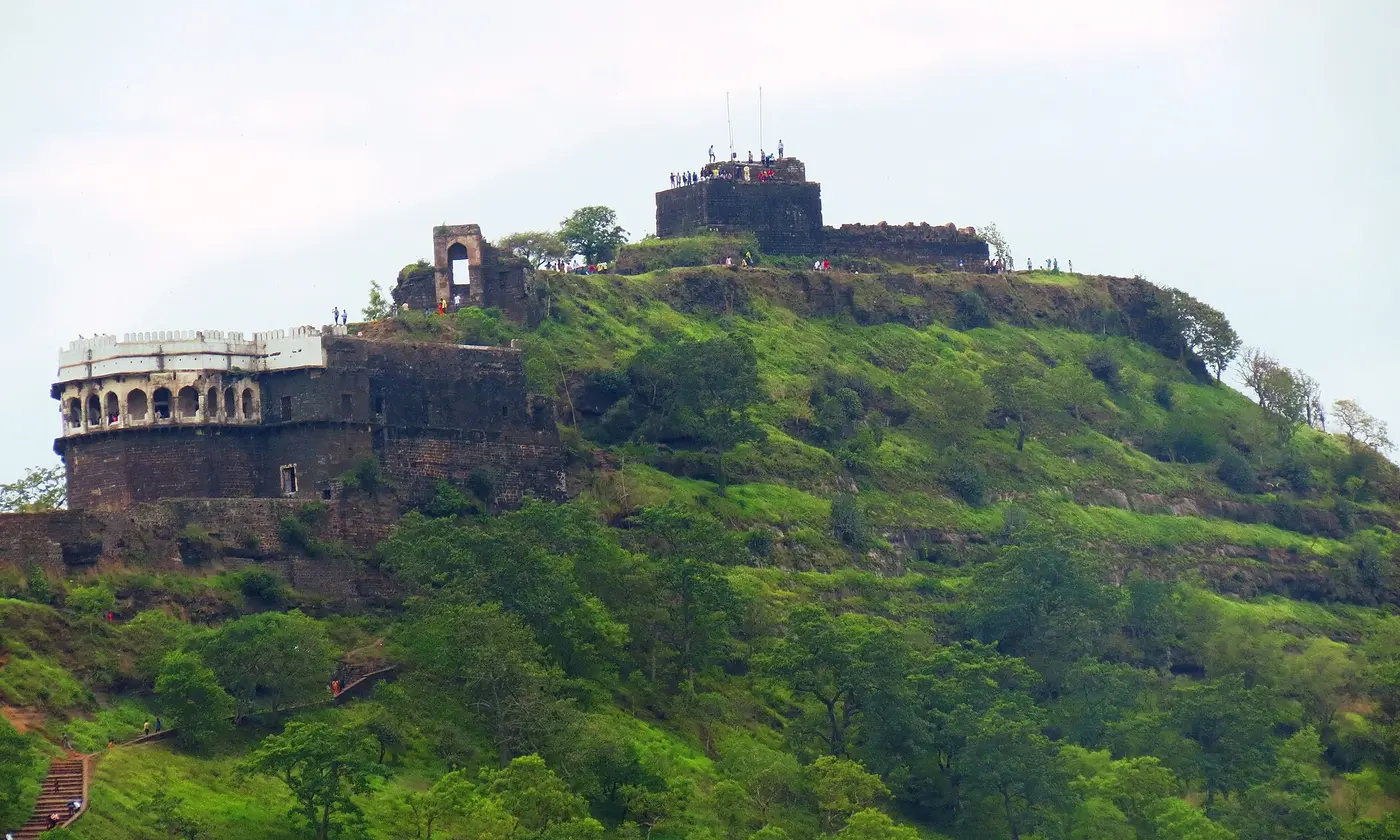
The Wise Fool’s Farmaan announced that the capital of the sultanate would move from Delhi to Daulatabad a place somewhere in present-day Maharashtra. Why? Well, the rulers of Deccan plateau were not so strong, and the land was fertile.
The second reason was the fear of Mongols raiding the Northern borders of the sultanate, so it made sense to loose some territory in the North and gain the same in the South so that total of landmass remains the same.
Brilliant! after all, everyone is accountable, and the media did ask questions back then, and some issues may need answers during the Darbar. (Darbars were press conferences or press interviews of yesteryears). After all, the Sultan of Delhi can’t run away saying “Dosti Bani Rahe.”
Now shifting of capital is not always a bad idea, the British rulers of India did it every year twice when they operated for Shimla the summer capital of India during summers and then back to Delhi in winters.
The British would move the administrative staff, back and forth and did it for almost eighty-three years from 1864 to 1947. In 1903 Kalka Shimla railway track was laid for passengers and logistics.
But no, our sons of the soil are emotional people and not heartless but logical like the British. We want to see the same faces. Delhi that time had prospered for almost one hundred eighty years and was challenging the prosperity of Cairo and Baghdad.
“Farmaan-e-8-PM.” destroyed Delhi many lost lives on the road due to hunger and exhaustion. Thank God there were no trains seven hundred years ago else many would have died caught sleeping on the tracks.
Today if you look at the news and see pictures of people with busted feet and a little girl crying because she can’t walk back to her native village and parents keep walking with a hard face.
The worst kind of ignorance is when you do not know, what you don’t know.
No one thought about running trains before the lockdown, to quarantine people scattered in villages, and then bring the significant and essential human resource after the lockdown to restart the economy.
Logistics could be managed better by involving NGO and the lateral entries like Prashant Kishore wanted to establish in 2014. The worst kind of ignorance is when you do not know what you don’t know.
Both the decisions were unplanned and without proper consideration. Both disrupted trade and commerce.
The Wise Fool did many experiments and worked relentlessly until the dynasty got down on its knees. Overly ambitious Tuglak also had croony capitalist friends like Choksi Bhai which had drained his treasury. Barani had written that the Sultan’s treasury had been exhausted by his action of giving rewards and gifts in gold.
So copper and brass coins were issued valued at par with gold and silver. “Farmaan-e-8-PM.” of demonetisation sounds quite similar to the Tughlaq copper and brass coins. Both the decisions were unplanned and without proper consideration. Both disrupted trade and commerce.
For example, for the first ten days of demonetisation, the banks could not get the correct size of the ATM cassette to dispense the new notes, as the new notes were far smaller.
Tughlaq was expansionists and wanted to conquer or annex immediately after his father’s death; he removed Article 370 for Warangal (Today Telangana), Madurai (Tamil Nadu) & Karnataka.
Besides that, after the Death of Genghis Khan Iraq and Iran were spiralling down. The Wise Fool wanted to take advantage of the situation an army estimated to be around thirty-seven lakh (three million and seven hundred thousand) without caring for the skill of the soldiers or the breed of the horses was recruited.
Perhaps the Mongol raids kept him pondering over the idea, and after paying the army, for sitting idle, for a year it was disbanded with a years pay in advance.
As the saying goes in Punjabi “Shauk Da koi mull Nahi Hunda” (A Hobby is invaluable). So in 1333 AD to satisfy the lust of “Chapan Inch ka Seena,” (A chest of fifty-six inches) an Expedition to conquer China was envisioned, this resulted in severe backlash from the local kings of Himachal and the expedition failed with more than one million soldiers dead without reaching the Chinese borders.
Sadly, he and his reincarnated have had similar problems. In 1334 the grand vision to suppress a rebellion in Mabar, which was identical to the weak economy we saw in recent times due to many reasons stated above, the Lord took upon himself to crush it quite like the vision of a five trillion economy.
Unfortunately, the fate was against both because an unseen enemy attached both. There was an outbreak of a pandemic bubonic plague, almost as contagious as COVID 19. Sadly both were defeated in their objective.
Both are ruthless and strict religious men. Both men are famous for cruel and rigid punishment to people of other religions. Both may be are guilty of genocide.
However, everything is not similar as per the Nineteenth-century British historian Stanley Lane-Poole said, that the courtesans of the former thought of him as a person with knowledge of philosophy, medicine, mathematics, religion, Persian, Urdu and Hindustani poetry. We have no confirmation on the courtesans of the later, so nothing is yet known.
The basis of this account is facts from history books and the experience of living in modern time.
Is it not him? Back to the future?
The critiques have called him hasty natured, and most of his expeditions failed due to lack of preparation. Ibn Battuta had worked in his court and had to escape, wrote in his travel journals that, “he depended on his own judgement and rarely took advice from others and has also criticised him for his giving of excessive gifts and “harsh punishments.” He was famous because whenever a gift was bestowed upon him, he would give gifts worth three times the value to show his stature.
In a nutshell, both took one step forward, which resulted in ten backwards. Sultan died in 1351 AD after living long enough to ensure the decline of the sultanate. The son of Great Ghazi Malik, founder of Tughlaq Dynasty died fighting a slave tribe.
References
Where to check the facts in this story.
- Muhammad bin Tughluq: capital shift, token currency, Qarachil expedition, Wikipedia
- The Tughlaq dynasty (1320–1414), UGC e-PG Pathshala (INFLIBNET)
- Ziauddin Barani, court historian, Wikipedia
- Ibn Battuta, Wikipedia
- Stanley Lane-Poole, Wikipedia
- Kalka–Shimla Railway (1903, UNESCO World Heritage), Wikipedia
- Shimla, summer capital of British India from 1864, Wikipedia
- Aurangabad railway accident, 8 May 2020, Wikipedia
- Indian migrant workers during the COVID-19 pandemic, Wikipedia
- 2016 Indian banknote demonetisation, Wikipedia
- Demonetisation: all you need to know about ATM recalibration, Business Standard
- Revocation of the special status of Jammu and Kashmir (Article 370), Wikipedia